The Government of Ghana, through the Ministry of Local Government, Decentralisation and Rural Development (MLGDRD), has unveiled an ambitious plan to construct modern 24-hour markets across all 261 Metropolitan, Municipal, and District Assemblies (MMDAs) in the country.
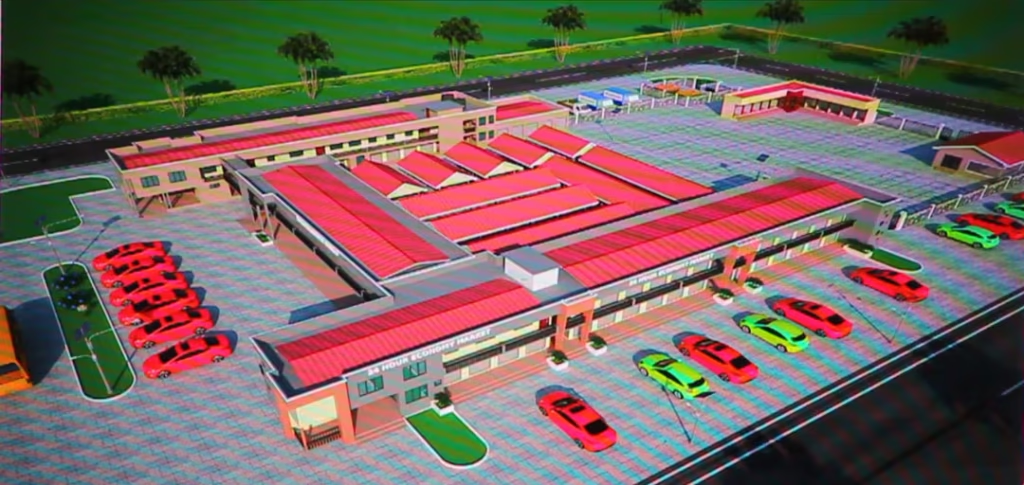
The initiative forms part of the government’s broader “24-Hour Economy” agenda, which aims to stimulate economic activity, create sustainable jobs, and enhance urban infrastructure to support round-the-clock commerce.
According to the Ministry, the planned markets will not just be trading centres but comprehensive, multi-functional facilities designed to improve trading conditions and public health.
- Modern sanitation and waste management systems
- Reliable water supply
- Hygienic vendor spaces
- Proper drainage networks
- Security and lighting for night operations
The 24-hour model will allow businesses to operate beyond traditional trading hours, encouraging productivity, attracting investment, and supporting the growing demand for flexible business operations.

“The goal is to transform our local markets into safe, modern, and accessible trading hubs that can operate efficiently throughout the day and night,” the Minister for Local Government, Ahmed Ibrahim, explained.
The Minister announced that construction works are expected to commence in December this year. The government has set a target completion date of December 2027 for all Assemblies that have secured suitable land for the project.
He said the inclusion of all 261 MMDAs demonstrates the government’s commitment to inclusive national development, ensuring that no district is left behind in the rollout.
“We want every district urban or rural to have a functioning 24-hour market that will support local economic growth and create decent jobs, particularly for women and the youth,” Mr. Ibrahim said.
The new markets are considered a cornerstone of the 24-Hour Economy, a policy framework that seeks to expand employment opportunities by enabling continuous business operations in key sectors such as retail, services, and logistics.
By formalising informal trading and ensuring access to proper facilities, the markets are expected to boost local revenue mobilisation, reduce congestion in city centres, and enhance public safety through structured trading spaces.
Economists have noted that such investments could have a multiplier effect — stimulating ancillary industries including transport, storage, food supply chains, and night-time services.
Beyond economic benefits, the Ministry believes the project will address long-standing challenges associated with traditional market operations including poor sanitation, flooding, and inadequate waste management.
The upgraded facilities will help improve hygiene, enhance environmental sustainability, and promote a more organised trading culture across municipalities.
“Clean, safe, and efficient markets are essential to achieving our broader vision of resilient, inclusive, and liveable urban environments,” the Minister added.
The project’s success will depend on effective coordination among national, regional, and local authorities, along with robust procurement, construction oversight, and vendor management systems.
Analysts caution that maintaining 24-hour market operations could come with additional costs such as security, energy, transportation, and sanitation services. Ensuring long-term maintenance and sustainability will therefore be crucial.
The new markets promise better infrastructure, higher sales potential, and improved working conditions. However, traders may also face new operational guidelines, fees, or competition as the sector becomes more formalised.
The government views the initiative as a major job creation driver, with opportunities in vending, logistics, cleaning, security, and management — directly benefiting women and young entrepreneurs.
MMDAs will play a central role in identifying and securing land, supervising construction, and managing the completed markets. This will require enhanced capacity in planning, procurement, and stakeholder engagement.
The markets are expected to enhance public spaces, improve sanitation, and stimulate the local economy — though citizens will be watching closely to see how efficiently the plan is implemented and funded.
The 24-hour market project builds on Ghana’s vision of creating a dynamic and inclusive economy capable of supporting continuous productivity and employment.
The initiative aligns with the government’s decentralisation and urban development agenda, which seeks to empower local authorities to manage infrastructure and services that directly impact citizens’ lives.
Once completed, the nationwide 24-hour markets are expected to transform Ghana’s retail landscape, stimulate rural-urban economic balance, and contribute significantly to sustainable growth.
Source: 3news.com By Joseph Armstrong Gold-Alorgbey