Governor of the Bank of Ghana (BoG), Dr Johnson Asiama has said that the money supply growth has moderated significantly, helping anchor inflation.
He said real rates remain high, creating room for a carefully calibrated easing cycle. And with inflation likely to settle between 4–6 per cent by year-end before stabilising around the target band in 2026.
He said that Ghana is entering what could become a multi-year period of price stability.
At the same time, the global environment remains fragile, and we must remain alert to risks, commodity price swings, geopolitical tensions, and tighter external financial conditions.
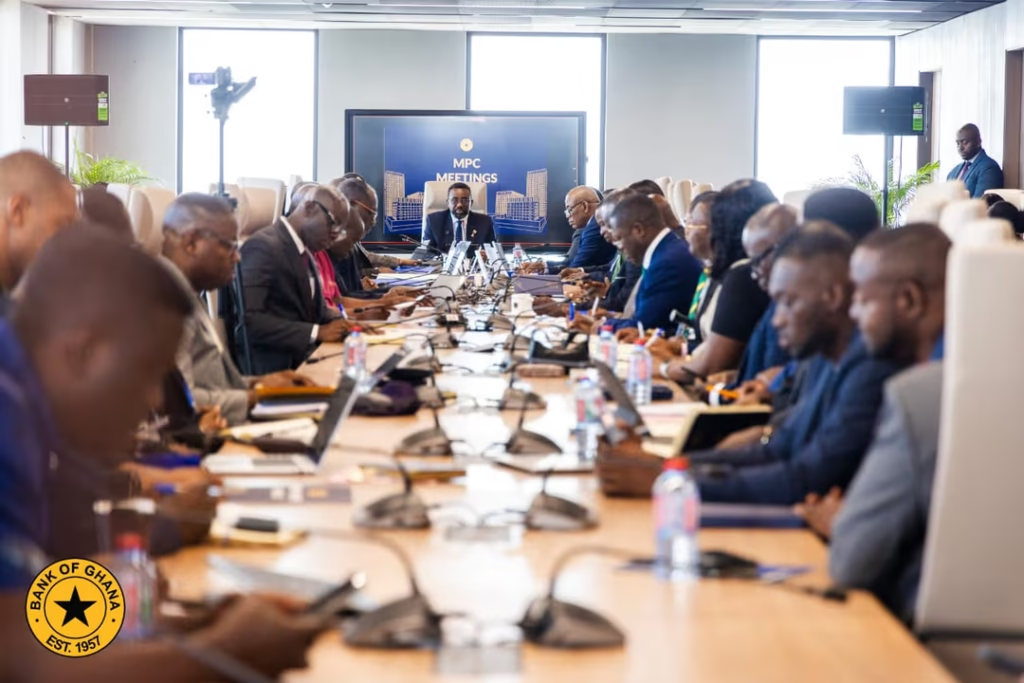
“Domestically, pressures around taxes, utilities, and costs of credit continue to weigh on business activity, even amid improved optimism, he further stated,” he said during the opening of the 127th Monetary Policy Committee (MPC) meeting in Accra on Monday, November 24.
For the 127th MPC deliberations, he said there are three areas that deserve their most careful attention:
“The Pace of Disinflation and the Real Interest Rate Path As inflation declines faster than projected, real interest rates have risen sharply. Staff analysis shows scope for gradual easing, but the balance must preserve credibility and avoid undermining the disinflation gains. The FX Market Reforms and Reserve Strategy
“While the new FX operations framework has improved transparency and market functioning, staff have highlighted the need to educate the public, and to diversify reserve assets to limit concentration risks, particularly around gold holdings.
Financial Sector Stability and Credit Transmission: The banking sector remains sound, but asset quality and recapitalisation risks for a few institutions must be addressed. A healthy credit channel is essential to sustaining the emerging growth momentum.”
What stands out this quarter is the broad momentum in economic activity, he said.
“Growth has been stronger and more diversified than anticipated. The first half of the year recorded 6.3 percent GDP growth, driven by vibrant expansion in services and agriculture, while non-oil GDP surged to 7.8 percent. High-frequency indicators echo this trend: the Composite Index of Economic Activity is up about 9 percent, and business and consumer sentiments remain firmly positive.
“Taken together, these gains confirm that the negative output gap is narrowing, and the economy is gradually shifting from recovery to expansion,” he said.
Dr Asiama said that the turnaround is not accidental.
He said it reflects sustained fiscal discipline, a cautious but determined monetary stance, and structural policy reforms, particularly the improvements in the FX operations framework and the rebuilding of external buffers. The 2026 Budget reinforces this discipline and places growth and job creation at the centre of Ghana’s next phase of economic transformation.
Looking ahead, he said, the growth outlook remains favourable.
“Staff projections, supported by recent real-sector indicators, suggest that the economy will maintain a steady expansion path through 2026. The strong harvest season, improved food supply dynamics, enhanced FX liquidity, and the easing credit environment all provide support for continued growth. Non-oil sectors, services, industry, and agriculture are expected to remain the key drivers,” he said.
Source: 3news.com By Laud Nartey